.avif)
Built-Up Roofing vs. TPO: Why Older Flat Roofs Are Being Replaced With TPO
Flat roofs are common throughout Albuquerque, especially on Pueblo-style homes, Southwest-style homes, additions, garages, and low-slope roof sections. Many of those roofs were originally installed with older asphalt-based systems commonly referred to as built-up roofing, tar and gravel, hot mop, rolled roofing, or simply an old flat roof. These systems were common for decades, but they are rarely the preferred choice for new residential flat-roof installations today.
In most cases, homeowners are not choosing between built-up roofing and TPO as two equal modern options. Built-up roofing is usually what is already on the roof. TPO is often the modern membrane system being considered when that older roof has been patched, coated, repaired, and finally reaches the point where replacement makes more sense than another temporary fix.
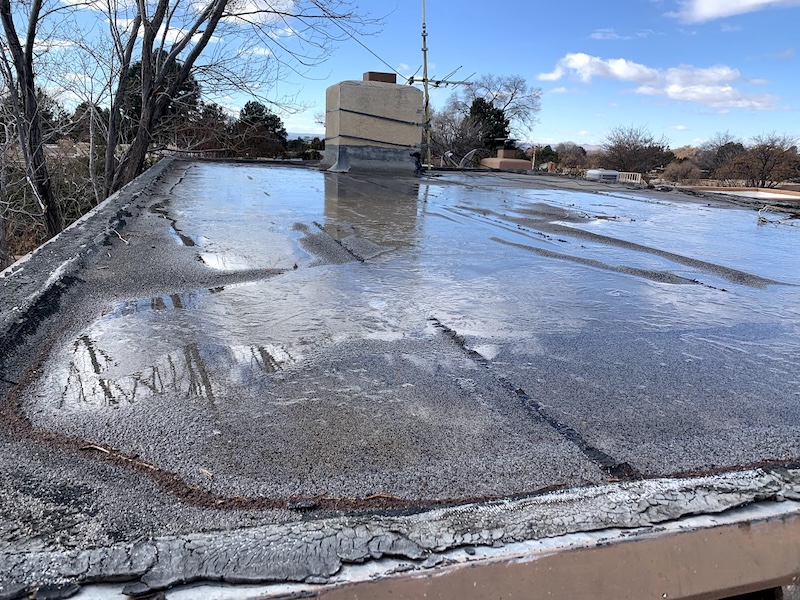
Built-Up Roofing Is Usually the Existing Roof, Not the New Choice
Built-up roofing was a practical flat-roof system for many years. Traditional systems used multiple layers of asphalt-based materials, roofing felts, cap sheets, gravel, coatings, or similar components to create a waterproof roof surface. When these roofs were newer and properly maintained, they could perform well, which is why so many older Albuquerque homes still have some version of them today.
The problem is that many of these roofs are no longer clean, original systems. They have often been repaired several times, coated over, patched around penetrations, and exposed to years of sun, wind, heat, and seasonal rain and ice. Once a built-up roof becomes brittle, cracked, heavily coated, or repeatedly patched, it becomes harder to evaluate and harder to keep watertight with small repairs.
Why TPO Has Become a Common Replacement Option
TPO, or thermoplastic polyolefin, is a single-ply membrane system used on flat and low-slope roofs. Instead of relying on multiple asphalt-based layers, TPO uses a flexible membrane with heat-welded seams. When installed correctly, those seams create a clean and continuous roof surface.
TPO is also commonly available in light-colored (white or tan), reflective surfaces, which is an advantage in Albuquerque’s climate. Older dark roof systems absorb a significant amount of heat, while a reflective membrane can reduce heat gain at the roof surface. The material itself is only part of the benefit, though. A TPO replacement also gives the contractor a chance to reset the roof system, address old patches, improve flashing details, correct penetrations, and deal with drainage or parapet conditions that may have contributed to previous leaks.
For many older flat roofs, the real value of TPO is not just that it is a newer product. The value is that it allows the roof to be rebuilt as a more modern, consistent system instead of continuing to chase leaks across an old layered roof.

When an Older Built-Up Roof Is Ready for Replacement
A built-up roof does not need to be replaced simply because it is old. If the roof is generally sound and has one isolated issue, a focused repair may still make sense. The concern begins when repairs become repetitive, leaks return in different areas, or the roof surface shows widespread cracking, blistering, brittleness, ponding water, or heavy layers of old coating.
Repeated patching can become a sign that the roof is past the point of practical repair. Each patch may solve one symptom without improving the roof as a whole. Over time, the homeowner may pay for several service calls, deal with interior stains or drywall repairs, and still end up needing replacement. At that point, moving to TPO may be the more sensible long-term decision.
Flat roofs should also be evaluated for drainage. If water ponds after storms or collects near scuppers, drains, penetrations, or low areas, the new roof system needs to account for that. Replacing an old roof without addressing drainage and details can lead to future problems even with a better membrane.
The Details Still Determine the Roof
TPO is not magic, and the membrane alone does not solve every flat-roof problem. Many Albuquerque roofs include parapet walls, scuppers, canales, HVAC curbs, evaporative cooler stands, skylights, wall transitions, and other details that must be handled correctly. These areas are often where leaks begin, even when the main roof surface looks acceptable.
A cracked parapet cap, failed wall flashing, deteriorated stucco edge, or poorly sealed penetration can allow water into the building regardless of the roof material. That is why a flat-roof replacement should include a review of the full roof assembly, not just the open field of the roof. The TPO membrane matters, but the edges, walls, penetrations, and drainage details determine how the system performs.
Cost and Long-Term Value
Replacing an older built-up roof with TPO will usually cost more than another small patch, but it may be the better long-term investment when the existing roof is failing. Cost depends on roof size, access, tear-off requirements, insulation, decking condition, parapets, scuppers, drains, penetrations, and whether hidden damage is discovered once the old material is removed.
The cheapest immediate repair is not always the least expensive option over time. If an old flat roof continues to leak after multiple repairs, the homeowner may end up paying for repeated patching, interior repairs, damaged insulation, drywall, paint, and eventual replacement anyway. A good evaluation should help determine whether the roof still has serviceable life left or whether replacement with TPO is the more practical path.
Schedule a Flat-Roof Evaluation
Many Albuquerque homeowners are not deciding between two brand-new roof systems. They are deciding what to do with an older built-up roof that has already been patched, coated, and repaired over the years. In many cases, TPO is the modern replacement option worth considering.
Tate Construction Company evaluates flat roofs, roof leaks, parapets, scuppers, flashing, drainage, and related exterior conditions throughout Albuquerque, Rio Rancho, Corrales, Placitas, and surrounding communities. If your older flat roof is leaking, heavily patched, or nearing the end of its life, we can help determine whether repair still makes sense or whether TPO replacement is the better long-term solution.
Contact Tate Construction Company to schedule a roof evaluation and discuss the right approach for your flat roof.