.avif)
Roof Leak Repair in Albuquerque: What to Do When Your Roof Starts Leaking
A roof leak rarely announces itself at a convenient time.
It may first appear as a ceiling stain after a storm, a slow drip near a light fixture, damp insulation in the attic, or water running down an exterior wall. During Albuquerque’s summer monsoon season, a roof that appeared trouble-free during months of dry weather can suddenly begin leaking under wind-driven rain.
The first priority is to limit interior damage. The second is to determine where the water is actually entering the roof.
Those are not always the same location.
Water can travel along roof decking, framing, insulation, pipes, and other surfaces before becoming visible inside the building. A ceiling stain identifies where the water emerged—not necessarily where the roofing system failed.
What Should You Do Immediately When a Roof Leaks?
Protect the interior
Move furniture, electronics, rugs, and other belongings away from the affected area. Place a bucket or waterproof container beneath active dripping.
If the ceiling is bulging with trapped water, keep people away from the area. A saturated section of drywall can collapse unexpectedly.
Do not touch wet electrical fixtures, outlets, wiring, or appliances. Shut off the affected circuit when it can be done safely, and contact an electrician when water has entered an electrical component.
Document what is happening
Take photographs and video of:
- Active dripping
- Ceiling and wall stains
- Damaged belongings
- The time and weather conditions
- Any visible exterior damage that can be photographed safely from the ground
Documentation may be useful for the contractor, your insurance company, and any later interior repairs.
Call for a roof inspection
Schedule a roof inspection as soon as conditions are safe. A proper inspection should identify the likely entry point, the path water traveled, the condition of the surrounding roof system, and whether temporary protection is needed before permanent repairs are made.
A roof should generally not be accessed during lightning, high winds, or active rainfall. Emergency protection may need to wait until conditions are safe enough for a contractor to inspect or tarp the affected area.
Common Causes of Roof Leaks in Albuquerque
Failed roof penetrations
Plumbing vents, exhaust vents, skylights, HVAC curbs, satellite attachments, and other penetrations interrupt the continuous roofing surface.
Leaks frequently develop when sealants deteriorate, flashing separates, fasteners loosen, or the roofing material pulls away from the penetration.
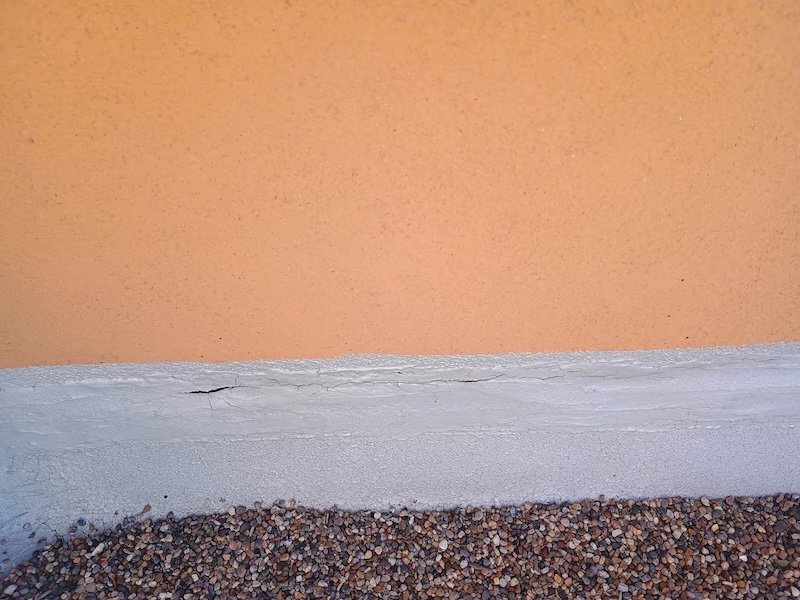
Parapet walls and coping
On flat-roofed homes, the source of a leak may be the parapet rather than the horizontal roof surface.
Cracked stucco caps, open joints, deteriorated wall flashing, and failed metal coping can allow water into the wall assembly. The moisture may then travel downward or inward before appearing inside the home.
Roof-to-wall transitions
Where a lower roof meets a taller wall, flashing must redirect water over the roofing surface.
Improperly installed or deteriorated flashing can allow water behind the wall finish. These leaks can be especially difficult to diagnose because the visible moisture may appear several feet from the transition.
Damaged shingles or tiles
Wind can lift shingles, break fasteners, and expose underlayment. Concrete or clay tiles may crack from impact, foot traffic, or movement.
The visible roof covering is only part of the system. Replacing one broken tile will not stop a leak if the underlayment beneath it has deteriorated.
Flat-roof seams and flashing
TPO, PVC, modified-bitumen, built-up, and coated roof systems each have different failure points.
Leaks may develop at:
- Open membrane seams
- Perimeter flashing
- Drain and scupper connections
- Previous repair locations
- Cracks in aged coatings
- Fasteners and termination bars
- HVAC curbs and penetrations
The repair material must be compatible with the existing roof. Applying a generic roof coating or sealant over every suspected location can make later repairs more difficult without correcting the actual failure.
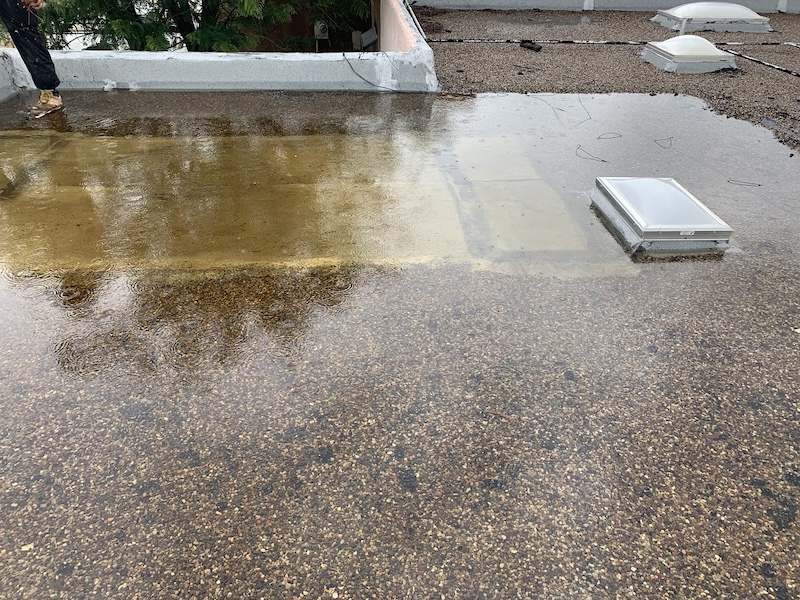
Ponding water and poor drainage
Flat roofs are designed with drainage in mind, even though they appear level from the ground.
Blocked drains, poorly positioned scuppers, settled roof areas, or inadequate slope can leave water standing after a storm. Ponding water increases the stress on seams, flashings, coatings, and previous repairs.
Drainage problems should be addressed as part of the repair rather than treating only the location where water entered.
How Much Does Roof Leak Repair Cost in Albuquerque?
A roof-leak repair may range from a small service repair to substantial reconstruction. For initial planning, homeowners may encounter ranges such as:
Minor isolated repairs: approximately $350 to $1,250
This may include:
- Sealing or rebuilding a small penetration
- Replacing limited damaged shingles
- Repairing a small membrane puncture
- Correcting an isolated flashing defect
- Repairing one open seam
- Limited tile and underlayment repair
Moderate repairs: approximately $1,250 to $3,500
This range may apply when the project includes:
- Several failure points
- A larger area of damaged underlayment
- Parapet or roof-to-wall repairs
- Multiple membrane seams
- Wet insulation
- Removal and rebuilding around an HVAC curb
- More extensive flashing replacement
Extensive repairs: $3,500 and above
Costs can exceed this range when there is widespread deterioration, structural deck damage, multiple active leaks, significant interior damage, or a roofing system near the end of its useful life.
At Tate Construction, we treat roof-leak pricing as condition-based rather than one-size-fits-all. The same ceiling stain may be caused by a small flashing defect, a failed roof penetration, deteriorated underlayment, wet insulation, parapet damage, or a larger roofing system failure. The inspection determines whether the project is a focused repair or part of a broader roof replacement issue.
Can a Roof Leak Be Repaired From Inside?
Simply put, no. An interior patch may control dripping temporarily, but it does not repair the roofing failure. Just because you stop the drips inside the house does not mean the leak is fixed. In fact, you likely will make the problem worse. Why? Roofing systems are designed to stop water from ever going past the exterior surface. Once water has entered the assembly, sealing the underside will trap moisture or redirect it to another location.
Interior access can help identify wet decking or trace the direction of travel. The permanent repair, however, must be completed at the exterior source.
Should You Apply Roof Coating Over a Leak?
A coating can be useful when it is compatible with the existing roof and installed as part of a properly prepared maintenance or restoration system.
It should not be treated as a universal leak repair. Coatings are intended to extend the life of the existing roof system by providing a fresh waterproof surface. It is not meant to seal holes, fill cracks or tears in membranes, or bridge joints between two different materials.
Coating over wet insulation, dirty surfaces, open seams, loose material, or failed flashing may temporarily hide the problem while moisture remains trapped underneath. Repairs, cleaning, preparation, and reinforcement should be completed before a coating is applied.
Does Homeowners Insurance Cover a Roof Leak?
Coverage depends on the cause of the loss and the language of the policy.
Damage caused by a sudden covered event—such as wind, hail, or falling debris—may be handled differently from damage caused by age, deterioration, deferred maintenance, or long-term leakage. Interior water damage may also be evaluated separately from the worn roofing material that allowed the water to enter.
Homeowners should:
- Photograph the damage
- Prevent additional damage when safely possible
- Retain invoices and inspection records
- Contact the insurance carrier promptly when a covered event may be involved
A contractor can document observed conditions, but the insurance carrier determines coverage under the policy. Contractors are neither qualified nor licensed to advise a homeowner on what is or is not covered by a homeowner's insurance policy. Nor is a contractor qualified or licensed to handle your insurance claim for you. A contractor can play a critical role in helping a homeowner fix a problem in conjunction with the homeowner's insurance carrier, but the contractor cannot and should not advise or take the lead on any claims.
Repair or Replace?
Repair is often appropriate when:
- The failure is isolated
- The surrounding roof remains serviceable
- The roof has not developed repeated leaks
- Compatible materials are available
- The underlying deck and insulation are sound
Replacement may be more practical when:
- Leaks appear in several areas
- The roof is near the end of its expected service life
- Moisture is widespread beneath the roof
- Previous repairs repeatedly fail
- Flashing and perimeter details are broadly deteriorated
- The repair would address only one symptom of a failing system
When both repair and replacement are reasonable options, Tate Construction explains the practical difference between the two so the homeowner understands whether a repair is likely to solve the problem or simply delay a larger replacement.
If your roof leak is part of a larger roofing issue, you can also use our roof replacement cost estimator to get a preliminary replacement range before scheduling an on-site evaluation.
Schedule Roof Leak Repair in Albuquerque
A small leak can damage insulation, drywall, paint, flooring, cabinetry, electrical components, and structural materials if it is allowed to continue.
Tate Construction Company provides roof inspections, leak diagnosis, roof repair, and related exterior repairs throughout Albuquerque, Rio Rancho, Corrales, Placitas, and surrounding communities.
Because we are a general contractor rather than a single-trade repair company, we can also address related stucco, drywall, framing, insulation, and interior damage when a leak affects more than the roof itself.
Contact Tate Construction Company to schedule a roof-leak inspection and determine whether your roof needs a focused repair or a more complete solution.