.avif)
Stucco Repair Cost in Albuquerque: What Homeowners Should Expect in 2026
Stucco is one of the most common exterior finishes in Albuquerque, and for good reason. It complements the architecture of the region, performs well in a dry climate, and can remain attractive for many years when properly installed and maintained.
It is not maintenance-free, however.
Cracks, impact damage, deteriorated parapets, failed sealant joints, and water intrusion can all require repair. Once homeowners notice a problem, one of their first questions is usually the same:
How much does stucco repair cost in Albuquerque?
The answer depends on much more than the visible size of the damaged area. A small crack may need only limited preparation and patching, while a similarly sized area with damaged building paper, rusted lath, or trapped moisture may require a much more involved repair.
Typical Stucco Repair Costs in Albuquerque
For general budgeting, Albuquerque homeowners may encounter repair costs in the following broad ranges:
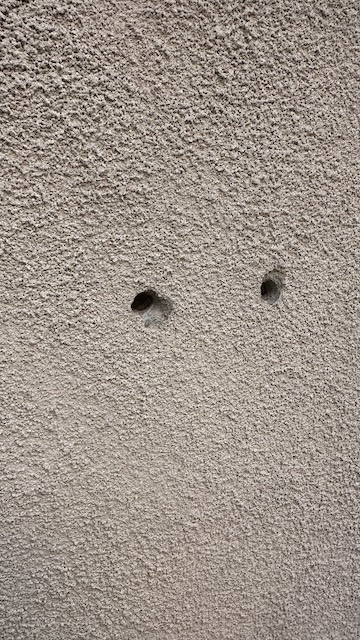
Small cracks, holes, and isolated patches: approximately $250 to $750
This category may include:
- Small anchor or screw holes
- Minor impact damage
- Limited hairline-crack treatment
- Small areas of loose finish
- Localized cosmetic patching
Even a small repair requires setup, surface preparation, materials, texture matching, cleanup, and often more than one visit. If the homeowner needs the repair painted, or the stucco is a synthetic color coat, and the homeowner is not able to provide the color, the contractor will need determine the correct color themselves and that adds cost as well. Most often, color matching stucco requires cutting out a section of the existing stucco, delivering the sample to the supplier for color matching, paying for the color matching service (suppliers typically do not offer free color matching for stucco samples like paint is), returning to the supplier when the sample is ready to be approved for the color match, and returning yet again to the supplier after the stucco product is mixed and ready for pickup. Each of these steps adds cost to the contractor that must be accounted for no matter how big or small the repair is.
Moderate localized repairs: approximately $750 to $2,500
A moderate repair may include:
- Several cracks across one wall
- Wider cracks requiring reinforcement
- Damaged stucco around a window or door
- Repairs at roof-to-wall transitions
- A section with deteriorated base coat
- Removal and replacement of loose or hollow stucco
These projects require more preparation and usually involve rebuilding multiple layers rather than applying finish material over the visible damage.
Larger or more complicated repairs: approximately $2,500 to $7,500 or more
Costs can rise when a repair involves:
- Exposed or corroded metal lath
- Torn or deteriorated building paper
- Significant water intrusion
- Large areas of delamination
- Parapet-wall failure
- Multiple elevations of the home
- Scaffolding or difficult access
- Extensive color and texture blending
A contractor may not know the complete scope until loose material is removed. What appears to be a surface crack can sometimes reveal a larger failure underneath.
What Determines the Cost of Stucco Repair?
The cause of the damage
Repairing the appearance of a crack is not enough if the underlying cause remains.
Cracks can result from normal shrinkage, movement of the structure, improperly placed joints, water intrusion, impact damage, or separation between materials. A lasting repair begins by determining why the stucco failed.
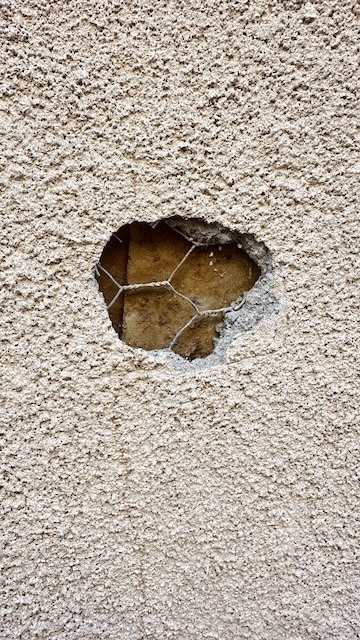
The depth of the repair
Stucco is a layered wall system. Depending on the construction, those layers may include:
- Finish coat
- Base or brown coat
- Scratch coat
- Reinforcing mesh or metal lath
- Water-resistive building paper
- Wall sheathing or another substrate
- Decorative foam shapes
- Foam insulation
Damage limited to the finish coat costs less to repair than damage extending through the base coat and into the water-management layers beneath it.
Traditional versus synthetic stucco
Traditional cement-based stucco and synthetic acrylic finishes are repaired differently.
Synthetic finish coats require compatible materials and careful texture matching. Cementitious stucco may require rebuilding the scratch, brown, and finish layers with appropriate curing between steps.
Using the wrong repair product can result in poor adhesion, visible patches, or cracks returning around the repair.
Color and texture matching
Matching existing stucco is one of the most difficult parts of a repair.
Texture can vary depending on the aggregate, application technique, tools, pressure, and the person applying the finish. Color also changes as stucco ages and is exposed to sunlight.
A repair can be structurally sound but remain visually obvious. In some cases, coating or refinishing a larger section of the wall is the best way to create a consistent appearance.
Access and setup
A repair high on a two-story wall or behind landscaping costs more than an identical patch at ground level with clear access. Scaffolding, roof access, protection of adjacent surfaces, and cleanup all affect the total labor required.
Can Hairline Stucco Cracks Simply Be Painted?
Paint may temporarily conceal a very fine crack, but it will not correct the cause.
Some hairline cracks can be treated with compatible elastomeric products before the wall is recoated. Wider or active cracks may need to be opened, cleaned, reinforced, and patched.
Applying paint over a moving crack usually results in the crack reappearing. More importantly, paint should not be used to hide an opening that may allow water behind the wall finish.
Why Parapet Cracks Deserve Special Attention
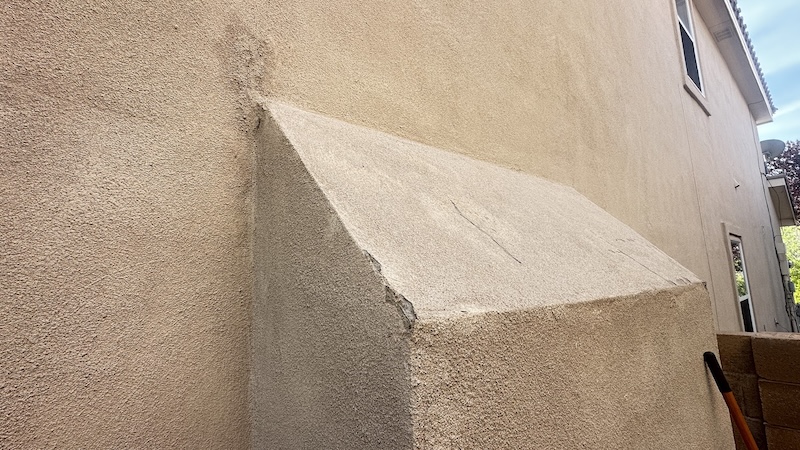
Parapet walls are particularly vulnerable because their horizontal or sloped tops receive direct exposure to sun, rain, snow, and standing moisture.
Cracks in a parapet cap can allow water to enter the wall from above. Once inside, that moisture can deteriorate the stucco layers, corrode metal lath, damage building paper, and create staining or delamination farther down the wall.
Repeatedly patching only the visible crack may not solve the problem. The cap, drainage, flashing, and wall assembly should be evaluated together.
For some buildings, a properly installed sheet-metal parapet cap offers a more durable long-term solution, although it creates a more commercial appearance than a traditional stucco cap.
Repairing Stucco Around Windows and Doors
Cracks commonly appear where stucco meets windows, doors, utility penetrations, and dissimilar materials.
These transitions depend on correctly installed flashing and sealant joints. Filling the crack with stucco alone may bridge over a joint that was designed to move.
A proper repair may require:
- Removing failed sealant or loose stucco
- Inspecting the surrounding substrate
- Repairing damaged reinforcement or weather barriers
- Rebuilding the stucco layers
- Installing an appropriate flexible sealant joint
- Matching the surrounding texture and finish
This approach costs more than simply covering the crack, but it is far more likely to produce a lasting repair.
When Is Re-Stuccoing Better Than Patching?
Localized repairs generally make sense when damage is limited and the remaining exterior is in good condition.
A larger restoration may be more practical when:
- Cracking is widespread
- Many previous patches are visible
- The finish is extensively faded
- Large areas sound hollow
- Water damage appears in multiple locations
- The homeowner wants to change the color or texture
- Matching isolated repairs would be difficult
The best solution is not always the largest project. A professional evaluation should distinguish between isolated defects and broader system failure.
Get an Albuquerque Stucco Repair Evaluation
Stucco damage rarely improves on its own. Addressing cracks and damaged areas early can help prevent a relatively manageable repair from becoming a larger water-intrusion or wall-reconstruction project.
Tate Construction Company provides stucco repair and exterior construction services throughout Albuquerque, Rio Rancho, Corrales, Placitas, and surrounding communities.
We evaluate both the visible damage and the conditions that caused it so the recommended repair addresses more than appearance.
Contact Tate Construction Company to schedule a stucco repair evaluation and receive a project-specific estimate.